Worldwide tracked delivery · Carefully selected quality · Personal order support

Handles, Straps, and Stress Points on Hermes Bags: Where the Leather Works Hardest and Why It Matters
Jan 5, 2026
By
Sophia Whitmore
0 comment(s)
Hermès bags are known for refined design and careful craftsmanship, but even the best leather has limits. Every time a bag is lifted, carried, or adjusted, certain areas work harder than others. Over years of use, those high-load zones tell the story of how the bag was handled. Understanding where stress concentrates helps owners make smarter choices about carrying, storing, and maintaining their bags. This article looks closely at the main stress points on classic Hermès bags, explains why those areas are vulnerable, and shows how specific design decisions either protect or expose the leather over time.
Why Stress Points Matter in Hermès Leather Goods
Leather stress points are locations where repeated force, bending, or friction occurs. On Hermès bags, these forces are usually subtle rather than extreme, but they add up. A handle that supports the full weight of the bag, or a strap that bends the same way every day, experiences micro-strain. Over time, that strain can show up as softening, darkening, creasing, or in some cases cracking.
Hermès selects leathers known for durability, such as Togo, Clemence, Epsom, Box, and Swift. Still, no leather is immune to physics. Understanding stress points is not about fear of damage. It is about using the bag in ways that respect how the leather behaves under load.
The Science Behind Leather Stress and Wear
Leather is a network of collagen fibers. When a bag is at rest, those fibers sit in a relatively neutral position. When weight is applied, the fibers stretch, compress, and shift. Repeated movement in the same direction trains the fibers to stay that way. That is why creases form where straps fold and why handles soften where hands grip.
Moisture, oils from skin, and temperature also play a role. Warm, humid conditions make leather more flexible, which can increase stretching under load. Dry conditions can make leather less forgiving, increasing the chance of visible creases or cracks at stress points.
Hermès designs aim to balance structure and flexibility, but daily use patterns often matter more than construction alone, as discussed in detailed Hermès bag wear analysis.
Handle Stress Points: Where Hermès Bags Work Hardest
Base of the Handles
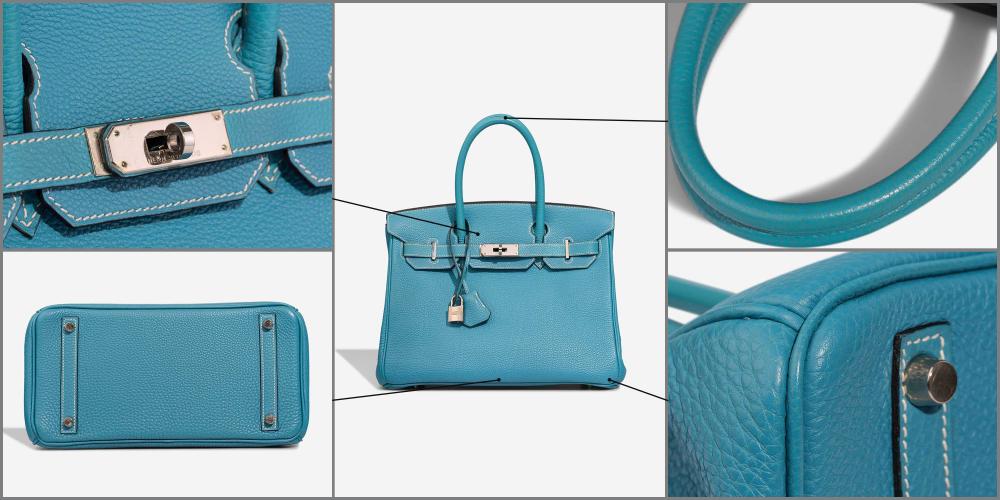
The most critical stress point on any top-handle Hermès bag is where the handle meets the bag body. On Birkin and Kelly bags, this area supports nearly all the weight when carried by hand or over the arm.
Each time the bag is lifted, the leather at the handle base flexes slightly. Over years, this can lead to softening and subtle stretching. In structured leathers like Epsom, wear may appear as fine cracks or loss of surface texture. In softer leathers like Clemence, the area may become rounder and more relaxed.
Hermès reinforces these zones with layered leather and precise stitching. That reinforcement distributes force across a wider area, reducing the chance of tearing. Still, overloading the bag accelerates wear here faster than anywhere else, particularly on structured icons like the Hermès Birkin.
Handle Tops and Grip Areas
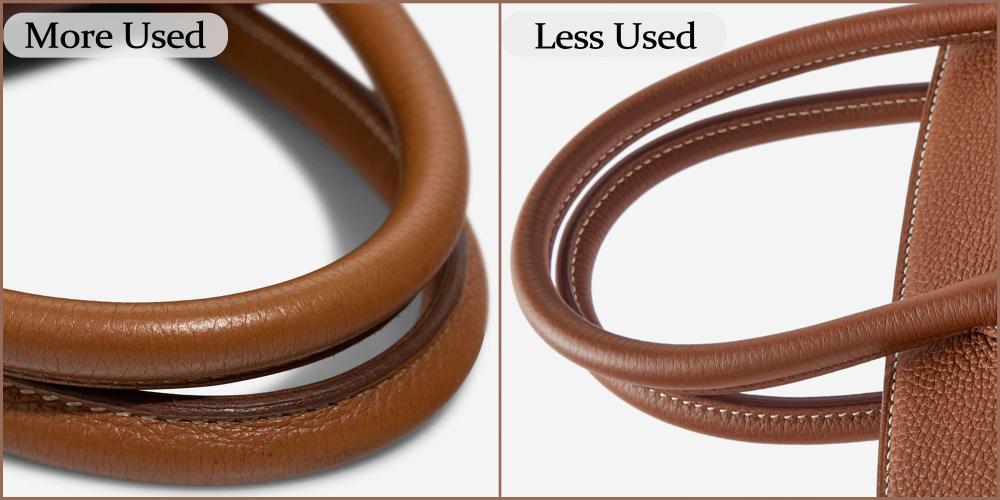
The top of the handle, where hands naturally rest, experiences a different type of stress. This area is exposed to friction, pressure, and oils from skin. Over time, handles often darken or polish in this zone, especially on lighter colors.
From a structural perspective, this is less dangerous than stress at the base, but visually it is often the first sign of use. Some owners use twillies to reduce friction and oil transfer. Others prefer natural wear as part of the bag’s character.
Handle Shape and Stress Distribution
Rounded handles distribute pressure more evenly than flat ones. Hermès favors rounded handle construction for this reason. The shape reduces sharp bending and helps the leather fibers move gradually rather than abruptly.
Strap Stress Points on Shoulder and Crossbody Styles
Strap Attachment Points
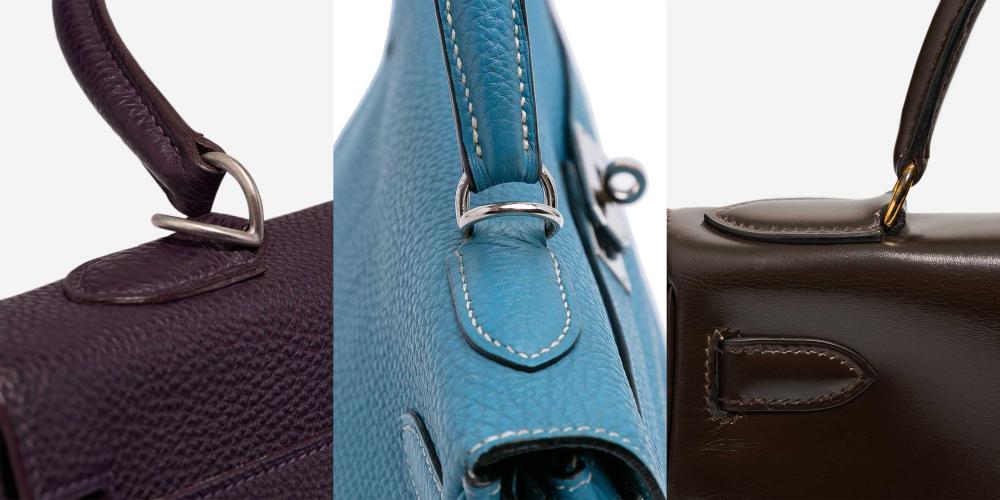
On bags with detachable straps, such as the Kelly, Constance, and Evelyne, the strap attachment points are major stress zones. These areas experience pulling force that changes direction as the wearer moves.
Metal hardware helps transfer load away from the leather itself, but the leather tabs holding that hardware still absorb repeated stress. Over time, this can cause stretching around the attachment or slight elongation of the holes where hardware passes through.
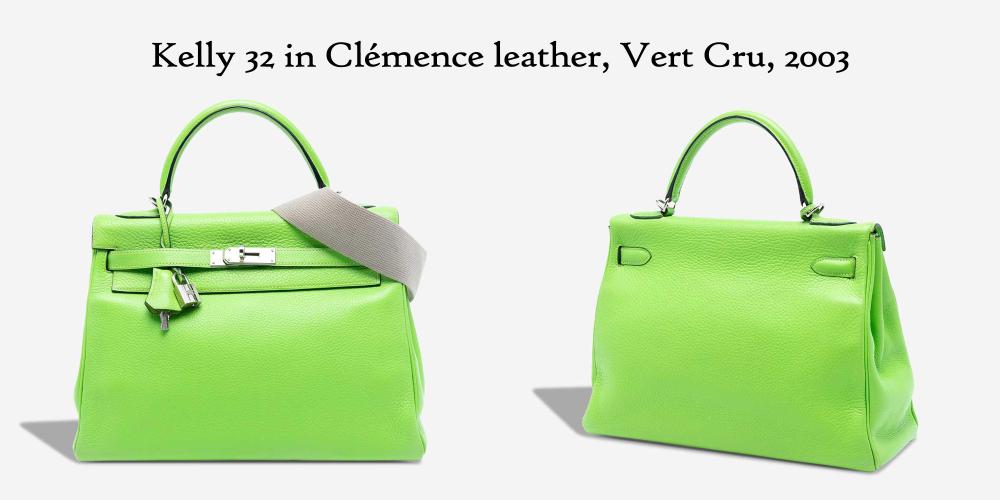
Regularly checking that hardware sits straight and does not twist helps reduce uneven wear, especially on designs like the Hermès Kelly.
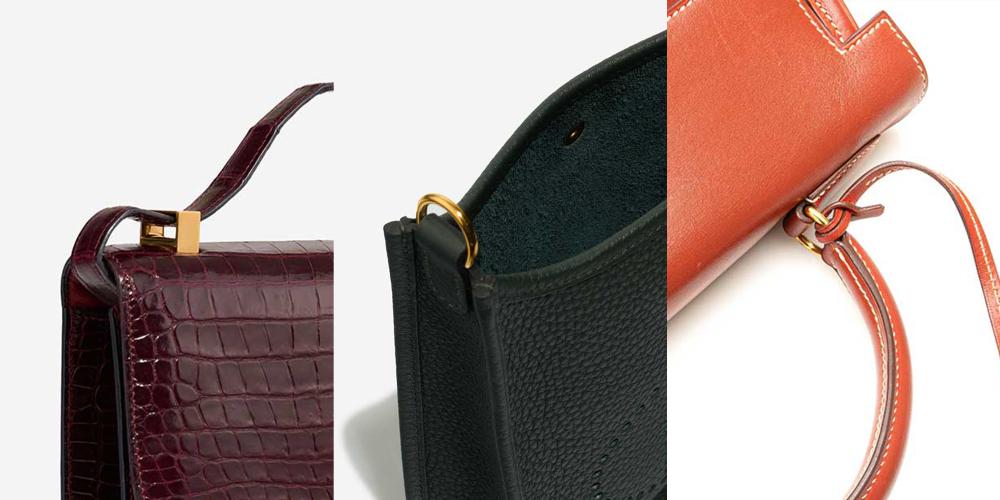
Strap Creasing and Folding Zones
Strap creasing is one of the most common signs of use on Hermès bags. Creases develop where the strap bends in the same direction day after day, most often where it rests over the shoulder or curves along the body during wear.
Repeated bending compresses leather fibers on the inside of the curve while stretching those on the outside. Over time, this creates visible lines or softening in the leather. Softer leathers tend to show these changes sooner, while coated or embossed leathers resist surface creasing for longer periods.
Changing how the bag is worn and allowing the strap to rest in different positions over time helps distribute stress more evenly and slows the formation of permanent creases, a pattern often seen on the Hermès Constance.
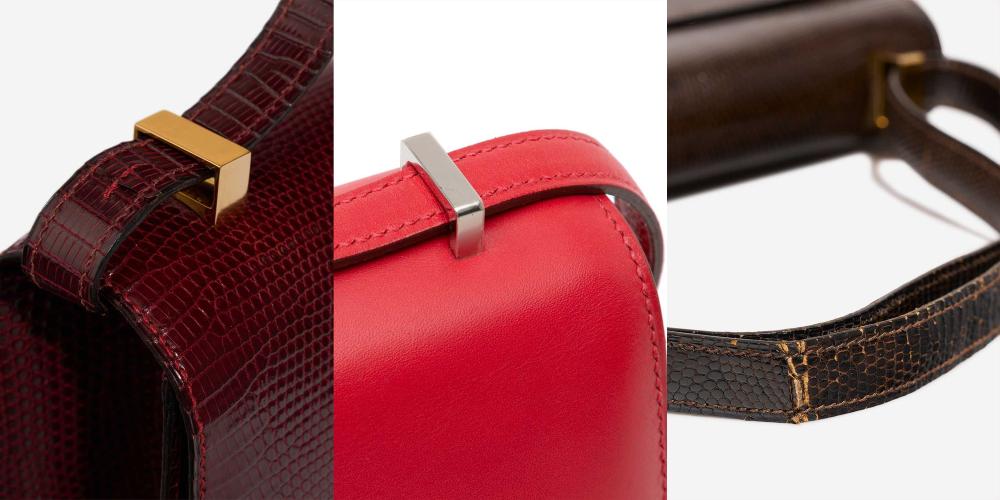
Adjustable Strap Holes
Adjustment holes concentrate stress in small areas. Each hole interrupts the leather’s fiber network, making it more vulnerable to stretching. When the same hole is used daily, it bears repeated load, which can lead to elongation or cracking around the edges.
Switching between holes from time to time spreads wear across a larger area and preserves the strap’s shape.
Corner Stress Points and Base Load Zones
Bottom Corners of the Bag
Although not part of handles or straps, corners are indirectly affected by how the bag is carried. When a bag hangs from the shoulder, weight pulls downward, increasing pressure at the lower corners.
Corner wear often appears as color loss or abrasion. Hermès sometimes adds subtle reinforcement layers here, but friction from surfaces like clothing or furniture still causes gradual wear.
Using a bag insert that supports the base can help distribute internal load more evenly.
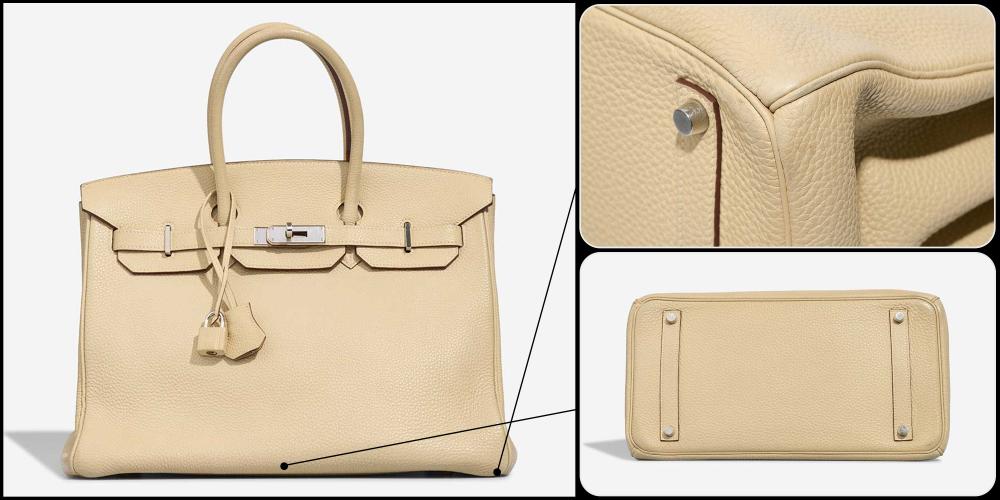
Bag Base and Feet
On bags with metal feet, such as the Birkin, stress is partially transferred from leather to hardware when the bag is set down. This reduces abrasion on the base leather but introduces another factor. Repeated impact when placing the bag down can compress leather around the feet.
Setting the bag down gently and avoiding rough surfaces reduces stress on both leather and hardware.
How Hermès Design Choices Manage Stress
Stitching Techniques
Hermès uses saddle stitching, which creates independent stitches rather than a single continuous thread. This method increases durability at stress points. If one stitch fails, the rest remain intact.
Stitch length and tension are carefully controlled. Even tension distributes stress evenly along seams, reducing the risk of localized strain.
Leather Selection by Bag Model
Hermès does not choose leather randomly. Structured bags often use firmer leathers that resist stretching at handle bases and strap attachments. More relaxed styles may use softer leathers, accepting some movement as part of the design.
Understanding the leather type helps owners predict how stress will show up visually, a topic expanded upon in Hermès leather behavior studies.
Hardware Placement and Size
Larger hardware spreads force over a wider area. Hermès often uses generously sized rings and plates at strap attachment points for this reason. Smaller hardware would concentrate stress and accelerate wear.
Common Wear Patterns and What They Mean
Softening Without Damage
Softening at handles or strap bases often indicates normal fiber relaxation rather than failure. This is common in bags that are used regularly but not overloaded.
Creasing Versus Cracking
Creasing is a cosmetic change. Cracking indicates fiber breakage and usually results from repeated bending in dry conditions or from excessive load. Conditioning and mindful use reduce this risk.
Darkening and Patina
Darkening from hand contact is common on natural leathers. It reflects oil absorption rather than structural weakness.
Practical Tips to Reduce Stress on Handles and Straps
Mind the Weight
Hermès bags are designed for daily essentials, not heavy loads. Keeping contents light reduces strain at every stress point.
Rotate Carrying Methods
Switching between hand carry, arm carry, and shoulder carry changes how force is applied. This rotation allows leather fibers to rest.
Store with Support
When not in use, support the handles and straps so they do not fold sharply. Filling the bag lightly with tissue helps maintain shape.
Adjust Straps Periodically
Changing strap length spreads stress across different holes and bending zones.
Visualizing Stress Points on Classic Hermès Bags
Diagram style visuals are especially helpful for understanding stress zones. On a Birkin, stress concentrates at handle bases, handle tops, bottom corners, and base feet. On a Kelly with strap, add strap attachments and adjustment holes. On an Evelyne, focus on strap bending zones and attachment tabs.
Detail photos of worn handles and creased straps show how leather responds over time and help distinguish normal wear from damage.
Long Term Care Through Awareness
Understanding stress points changes how owners interact with their bags. Instead of reacting to wear after it appears, owners can anticipate it and adjust habits early. This does not mean treating the bag delicately at all times. It means using it with awareness of how leather behaves.
Hermès bags are meant to be used. Their materials and construction can handle daily life when that use is balanced and informed. Knowing where leather works hardest allows owners to enjoy their bags fully while preserving structure and beauty for years, in line with the standards upheld by Hermès.