Worldwide tracked delivery · Carefully selected quality · Personal order support

How Hardware Choices Affect Hermes Bag Leather Wear: Palladium vs Gold at Clasps, Feet, and Straps
Jan 4, 2026
By
Sophia Whitmore
0 comment(s)
Hermes bags are often discussed in terms of leather type, craftsmanship, and resale value. Hardware tends to be treated as a secondary detail, chosen for aesthetics or personal taste. In reality, hardware finish and placement play a major role in how a bag ages. Clasps, feet, rings, and strap attachments all sit directly against leather. Over time, those contact points influence rubbing, dents, glazing breakdown, and surface marks.
This article explains how different Hermes hardware finishes interact with leather in real use. It focuses on palladium, gold, and other finishes, and looks closely at where wear actually happens: turnlocks, sangles, strap rings, base feet, and corners. The goal is not to make one finish sound “better,” but to help you understand what to expect and how to reduce avoidable damage.
Why Hardware–Leather Interaction Matters
Every Hermes bag is designed with metal touching leather. This is unavoidable. What varies is how often those areas move, how much pressure they carry, and how hard the metal surface is compared to the leather beneath it.
Leather is flexible and organic. Metal is rigid and unyielding. When they meet repeatedly, especially with friction or weight involved, the leather will always change first. The type of hardware finish influences how fast that change becomes visible and what it looks like.
Collectors often notice wear before they understand its cause. A faint half-moon near a turnlock, a dull patch under a strap ring, or compressed leather around a foot is usually blamed on “use,” which is true but incomplete. Hardware choice and hardware behavior explain the pattern.
Overview of Common Hermes Hardware Finishes
Hermes uses several hardware finishes across its bag collections. While the base metal is similar, the surface treatment affects hardness, smoothness, and how it ages.
Palladium Hardware
Palladium is a silvery-white finish with a cool tone. It is one of the most popular modern choices because it looks clean and neutral against many leathers.
Key characteristics:
- Hard, smooth surface
- Resists tarnish
- Shows scratches and micro-abrasions easily
- Reflects light sharply
Because palladium is hard and slick, it tends to glide across leather rather than grip it. That sounds positive, but it can create consistent rubbing patterns where movement is repeated, especially on structured styles like the Hermes Birkin.
Gold Hardware
Hermes gold hardware is not real gold but a gold-toned metal finish. It has a warmer color and slightly softer feel compared to palladium.
Key characteristics:
- Slightly softer surface
- Develops patina over time
- Shows scratches less starkly than palladium
- Can dull with friction
Gold hardware tends to create more compression marks than sharp rub marks. It may also transfer warmth visually to the leather, which makes dents more noticeable on lighter colors, particularly on bags such as the Hermes Kelly.
Permabrass and Brushed Finishes
Permabrass is a matte, aged gold look. Brushed finishes are textured rather than mirror-smooth.
Key characteristics:
- Less reflective
- Texture increases friction
- Hides scratches better
- Can grip leather more than polished hardware
These finishes often show less visible hardware wear, but they can create more pronounced leather dulling in contact zones.
Ruthenium and Other Dark Finishes
Dark hardware finishes are less common but appear on select bags.
Key characteristics:
- Hard surface
- Lower reflectivity
- Wear shows as light spots rather than scratches
- High contrast against light leather
Dark finishes can make leather wear easier to spot because any rub area becomes lighter by comparison.
Turnlocks and Clasps: Small Area, High Impact
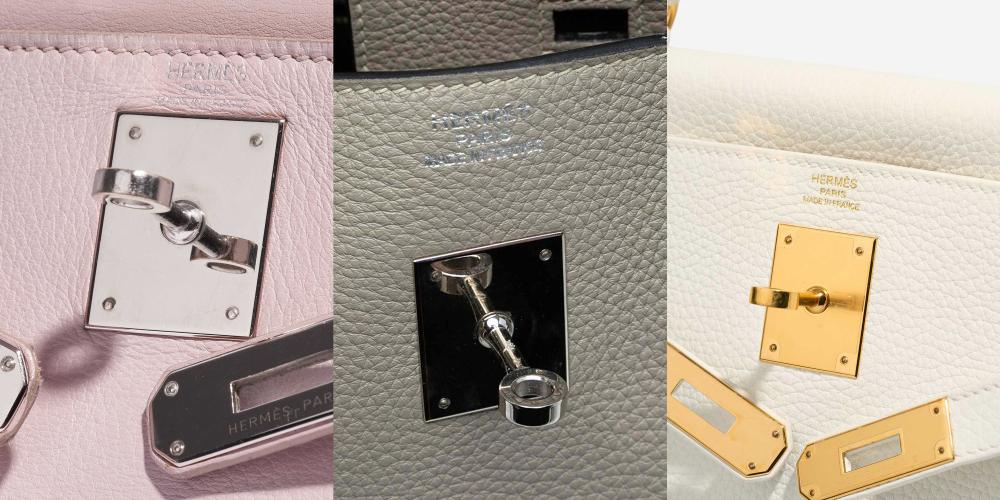
The turnlock is one of the most important contact points on Hermes bags like the Kelly, Birkin, and Constance. It combines pressure, movement, and repeated contact in a very small area.
How Turnlocks Touch Leather
When a bag is closed, the metal plate sits flush against the leather. When opened and closed, the rotation creates a slight dragging motion. Over time, this produces predictable wear patterns.
Common signs include:
- Semi-circular rub marks around the plate
- Dulling of leather grain
- Slight indentation beneath the plate
- If you want to know more about Hermès, visit our Hermès blog.
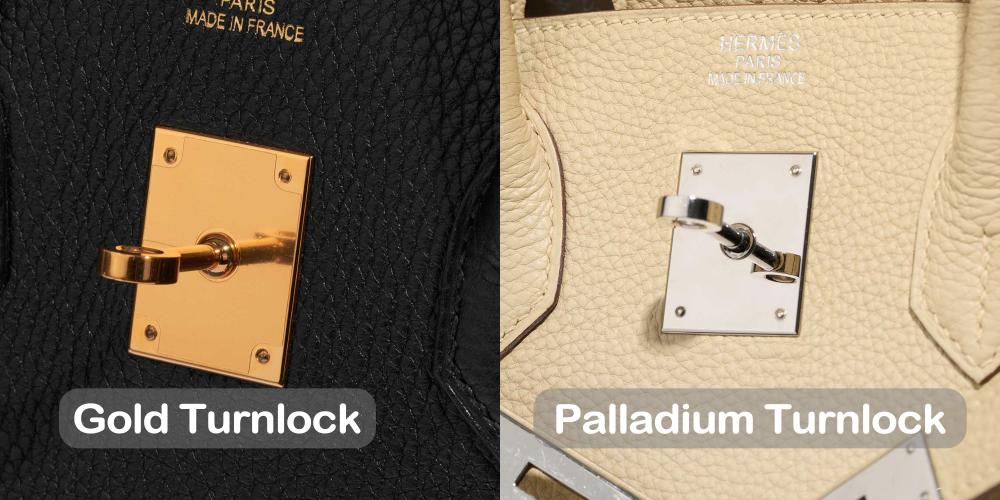
Palladium vs Gold at the Turnlock
Palladium turnlocks tend to create sharper-looking rub marks. Because the surface stays bright, any change in the leather looks more obvious. On smooth leathers like Box or Swift, this can appear as a polished patch.
Gold turnlocks often compress the leather rather than polish it. The wear shows up as soft dents or darker shading, especially on Togo or Clemence.
Neither is worse in terms of structural damage, but palladium wear looks cleaner and more defined, while gold wear looks warmer and more blended.
Strap Rings and Attachment Points
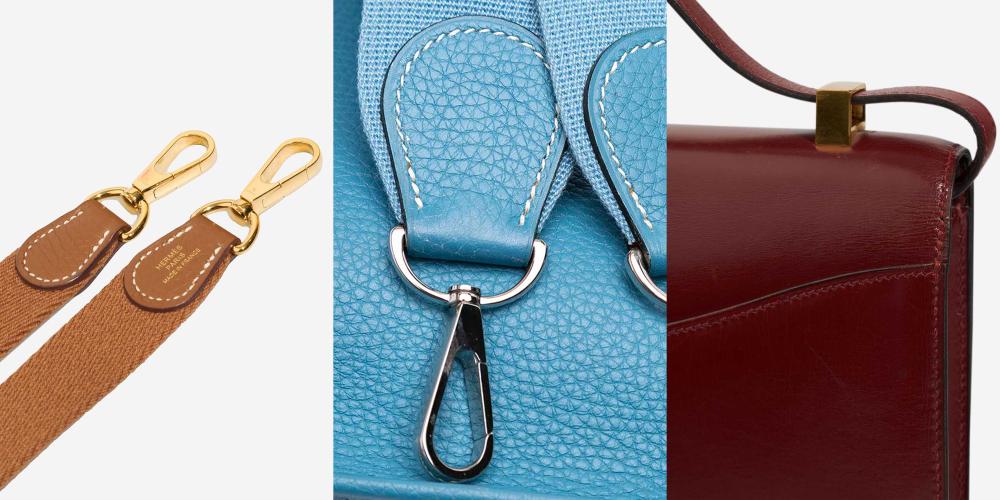
Strap rings are among the most active hardware elements on Hermes bags. They swing, rotate, and bear weight.
Why Strap Rubbing Is So Common
Every time a bag is carried, the strap moves. Even slight motion creates friction at the ring and leather loop. Over months or years, this results in:
- Color transfer
- Flattened grain
- Darkened contact patches
- Glazing wear along edges
This is especially noticeable on crossbody styles like the Evelyne, Jypsiere, and Constance.
Hardware Finish and Strap Movement
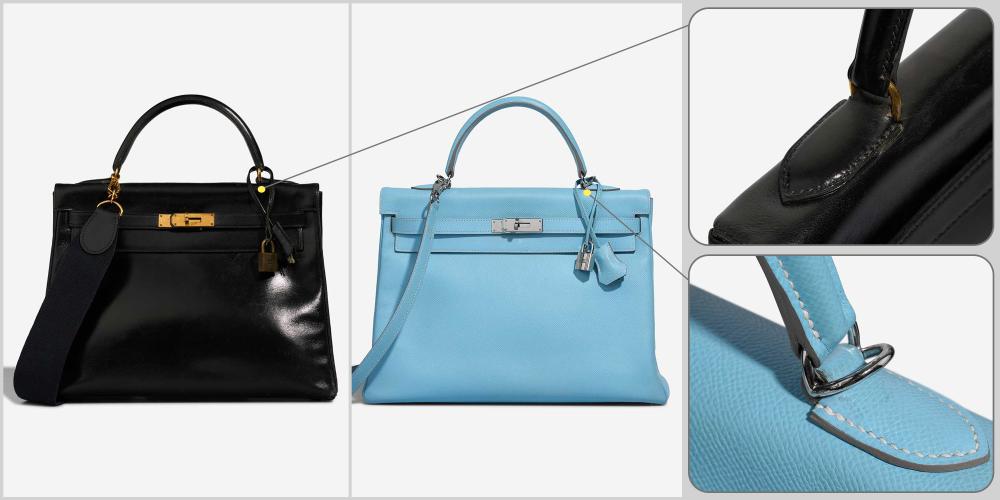
Palladium rings slide smoothly, which can spread wear over a wider area. The leather may look evenly dulled but less deeply indented.
Gold and brushed finishes have more grip. They tend to concentrate wear in specific spots, leading to darker patches or visible grooves.
Strap rubbing is not a defect. It is a direct result of movement plus metal. Understanding this helps buyers distinguish normal aging from misuse.
Bag Feet and Base Contact
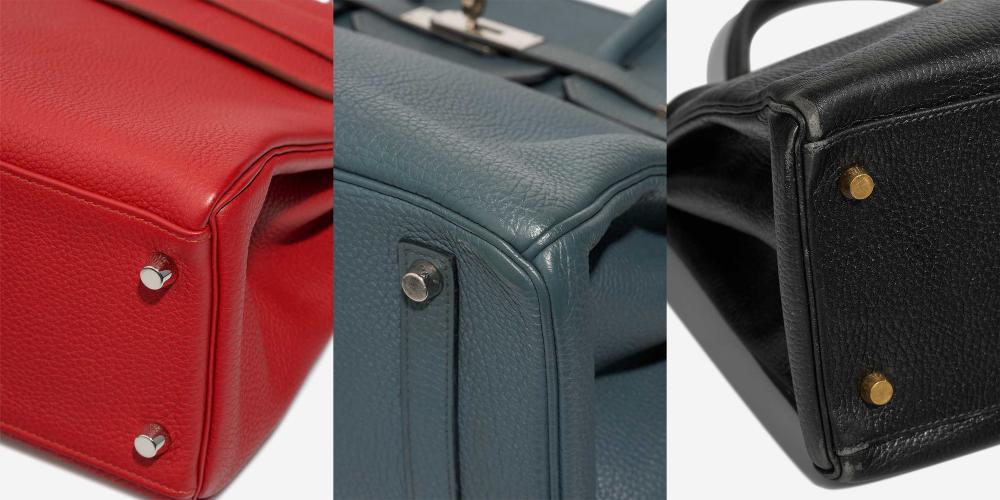
Feet are designed to protect the leather base, but they also introduce metal-to-leather contact under pressure.
How Feet Affect Leather Over Time
When a bag is set down, the weight transfers through the feet into the base leather. Over time, this causes:
- Compression rings around feet
- Slight sinking of leather between feet
- Polished patches under the metal
This effect is strongest on softer leathers like Clemence.
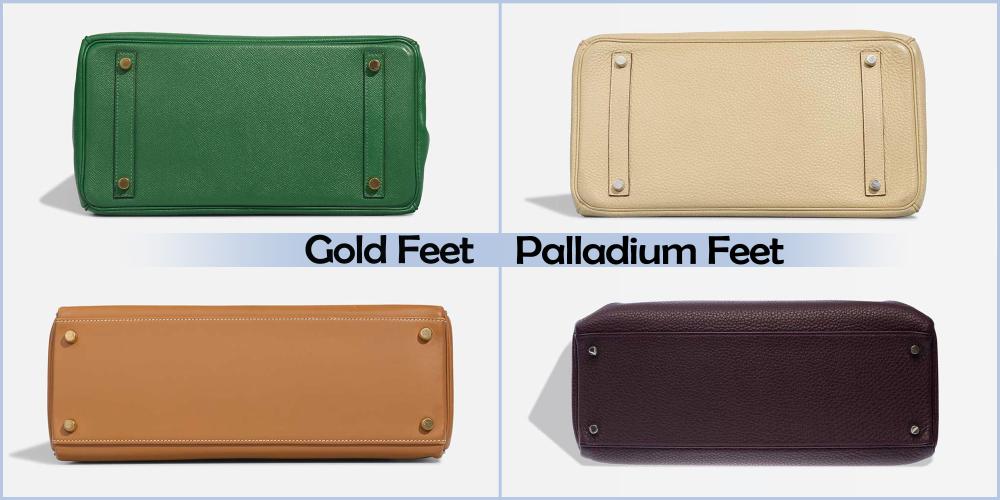
Palladium vs Gold Feet
Palladium feet keep a crisp outline. Any compression mark remains well-defined. On lighter leather, this can look like a pale ring.
Gold feet soften visually as they age. The surrounding leather often darkens slightly, blending the mark.
Feet-related wear is often mistaken for staining. In reality, it is pressure plus metal, not dirt.
Corners, Rings, and Hidden Contact Points
Some hardware contact points are less obvious until wear appears.
Interior Rings and D-Rings
Interior strap rings can rub against lining leather, especially when the bag is empty or loosely packed. This often creates shiny patches inside the bag.
Side Rings and Touret Hardware
On Kelly bags, the touret hardware can rub against the side panels when the bag is carried open. Over time, this creates faint arcs of wear that match the metal shape.
Hardware finish affects visibility. Polished finishes leave clearer marks. Matte finishes leave broader dulling.
Leather Type Changes the Outcome
Hardware does not act alone. Leather choice plays a major role in how wear develops.
Smooth Leathers
Box, Swift, and similar leathers show rubbing quickly. The grain is fine, so any polishing stands out. Hardware contact often looks dramatic early but stabilizes over time.
Grained Leathers
Togo, Clemence, and Epsom resist surface marks better, but they compress. Hardware contact leads to dents and grain flattening rather than shine.
Exotic Leathers
Exotics react differently. Hardware contact can lift scales or alter texture. Palladium is often chosen for exotics because it shows fewer color changes against the leather.
Color Makes Wear More or Less Visible
Leather color influences how hardware interaction is perceived.
- Light colors show compression and dulling easily
- Dark colors hide rubbing but show shine
- Matte colors highlight polished patches
Hardware choice can either amplify or soften these effects.
Preventing Excessive Hardware-Related Wear
You cannot eliminate wear, but you can manage it.
Simple Habits That Help
- Remove straps when storing the bag
- Avoid overloading, which increases pressure
- Store with tissue padding to reduce movement
- Rotate bags to reduce repeated stress
Protective Accessories
Some owners use felt guards or plastic covers temporarily. These can help during travel but should not be used long term, as trapped moisture can damage leather.
If you want to know more about Hermès fashion, you can visit our Hermès blog.
How Collectors and Resellers View Hardware Wear
In the resale market, hardware-related leather wear is evaluated differently from scratches or stains.
- Even rubbing is considered normal use
- Deep grooves or cracks raise concern
- Hardware dents that distort leather shape reduce value
Understanding the cause helps sellers describe condition accurately and buyers assess risk.
Choosing Hardware With Aging in Mind
Hardware choice should align with how you plan to use the bag.
- Frequent use favors finishes that blend wear
- Occasional use allows for higher contrast finishes
- Structured bags show marks differently than slouchy ones
There is no universally “best” option. There is only what ages in a way you find acceptable.
Final Thoughts
Hermes hardware is not just decorative. It actively shapes how a bag ages. Palladium, gold, and other finishes interact with leather in predictable ways at clasps, feet, rings, and straps. Once you know where to look, the patterns make sense.
Wear does not mean failure. It means contact, movement, and time. By understanding how hardware choices influence leather behavior, you can make informed decisions, care for your bag realistically, and recognize normal aging when you see it - just as intended by the standards upheld by Hermes.