Worldwide tracked delivery · Carefully selected quality · Personal order support

Sun, Humidity, and Hermes Bag Color Care: Practical Habits That Actually Work
Dec 31, 2025
By
Sophia Whitmore
0 comment(s)
Hermès bags are known for longevity. Many are passed down, resold, or worn for decades. But even the finest leather does not exist outside of its environment. It reacts quietly and continuously to light, air, heat, and moisture.
Most color problems do not come from dramatic accidents. They come from ordinary life. A bag left near a window because the shelf looks nice there. A humid summer that goes unnoticed. A closet that feels fine to you but slowly stresses leather over time.
This article focuses on real-world Hermès bag color care, not idealized storage conditions. You do not need a climate-controlled vault or a shelf that never sees daylight. You need awareness, consistency, and a few habits that fit naturally into daily life.
How Hermès Leather Color Actually Ages
Before talking about protection, it helps to understand how color changes in the first place.
Hermès dyes are absorbed into the leather fibers, not painted on the surface. This is why the color has depth and warmth. It is also why color change is gradual rather than immediate.
Over time, leather color shifts because of:
- Ultraviolet exposure breaking down dye molecules
- Oxidation caused by air and heat
- Moisture affecting fiber structure
- Oils from hands and clothing altering the surface
Some change is normal and even desirable. What most owners want to avoid is uneven aging, where one part of the bag looks noticeably different from the rest.
Good care does not freeze a bag in time. It helps the bag age evenly.
Why Sunlight Is the Biggest Risk to Color
Sunlight is the most underestimated factor in Hermès bag color care.
Many people assume sun damage only happens outdoors. In reality, long-term indoor exposure often causes more visible change because it happens consistently and always from the same direction.
What sunlight does to leather
Sunlight affects leather in three ways at once:
- UV rays weaken dye bonds
- Heat dries out natural oils
- Repeated exposure accelerates oxidation
None of this happens overnight. It happens slowly, which is why people often notice fading only after it becomes difficult to ignore.
If you want to know more about Hermès, visit our Hermès blog.
Direct Sunlight vs Bright Rooms
A bright room is not automatically dangerous. What matters is direct exposure.
Direct sunlight creates:
- Sharp shadows
- Warm surfaces
- Concentrated UV in a fixed area
Indirect light, such as light filtered through curtains or reflected off walls, is far gentler and usually safe for daily storage.
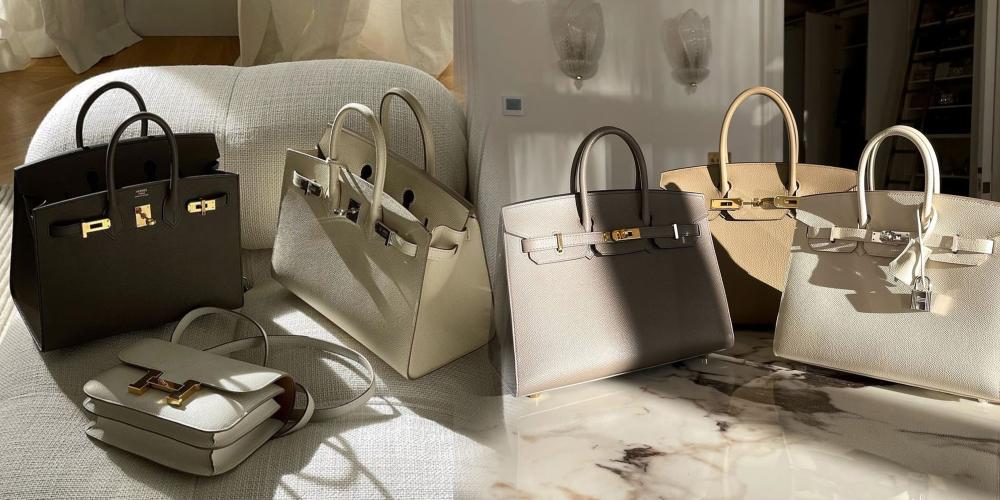
A good test is simple: if sunlight creates a clear outline or shadow on your bag, that light is too strong.
The Uneven Fade Problem Most Owners Miss
One of the most common color issues with Hermès bags is uneven fading.
This usually happens when:
- A bag sits facing a window
- One side is exposed every day
- The bag is rarely moved or rotated
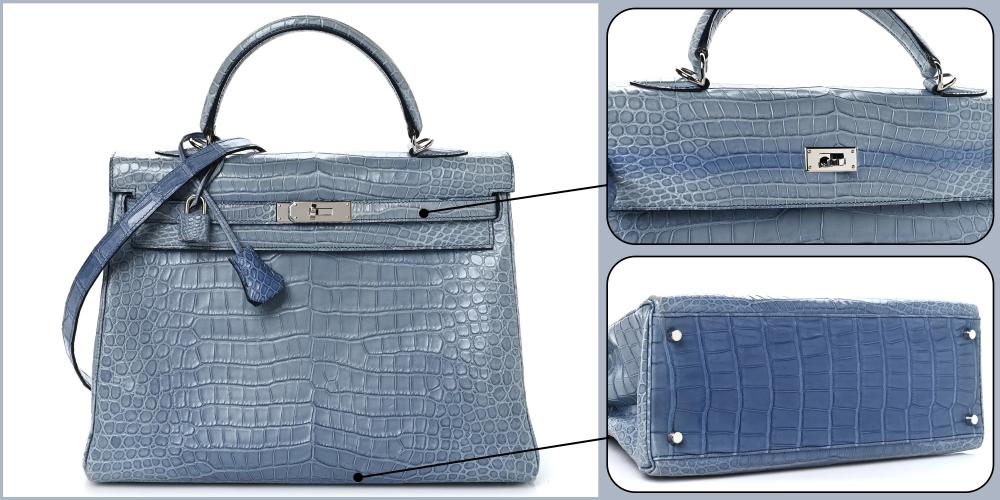
Over months, one panel may appear lighter or duller. Handles may age faster than the body. On structured bags like Birkin and Kelly, the difference becomes very obvious - and even more noticeable on lighter leathers used in styles such as the Hermès Constance.
An easy habit that prevents this
Rotate your bag’s position every one to two weeks. Even small changes in angle or placement help distribute light exposure more evenly.
This single habit prevents more visible damage than most products ever could.
Sun Exposure During Everyday Use
Using your bag outdoors is not the issue. Leaving it exposed when you are not paying attention is.
High-risk situations include:
- Leaving a bag on a café table in full sun
- Setting it on a car seat under the windshield
- Resting it near a sunny window at home
Cars are especially dangerous. Heat builds quickly, and UV passes through glass more than people realize.
If a space feels uncomfortably warm for you, it is already too warm for leather.
Heat: The Factor That Makes Everything Worse
Heat deserves its own discussion because it amplifies every other problem.
Even without visible sunlight, heat:
- Dries leather from the inside
- Softens structure temporarily
- Makes dyes more reactive and unstable
Repeated heat exposure leads to long-term stiffness and color dullness - something owners of softer leathers like the Hermès Evelyne often notice first.
Heat sources people often overlook
- Heated floors
- Radiators
- Space heaters
- Shelves above appliances
Leather prefers stable temperatures. Consistent warmth is more damaging than brief temperature changes.
Humidity: Slower Than Sun, Often More Destructive
While sun damage is usually visible, humidity damage is subtle and delayed.
Humidity affects leather by:
- Trapping moisture inside fibers
- Weakening structural integrity
- Encouraging mold and mildew
- Causing surface bloom
Many people only notice humidity problems when they take a bag out of storage and something feels “off.”
What Healthy Humidity Looks Like for Leather
Leather thrives in balance.
Ideal range
- 40 to 55 percent relative humidity
Below this range:
- Leather dries
- Color loses richness
- Long-term cracking risk increases
Above this range:
- Mold risk increases
- Bloom appears more often
- Leather may feel stiff or sticky
Homes naturally drift outside this range with seasons, weather, and heating systems.
If you want to know more about Hermès fashion, you can visit our Hermès blog.
Managing Humidity Without Overdoing It
Trying too hard to control humidity can backfire.
Silica packets: helpful, not harmless
Silica absorbs moisture, but too much creates dryness.
Best practice:
- Use one or two packets per storage area
- Place them near the bag, not inside it
- Replace every three to four months
Never let silica touch leather directly. Concentrated dryness can damage soft leathers.
Airflow Is More Important Than Sealing
A common mistake is sealing bags in plastic bins to “protect” them.
Plastic traps moisture. Leather needs air.
Better options include:
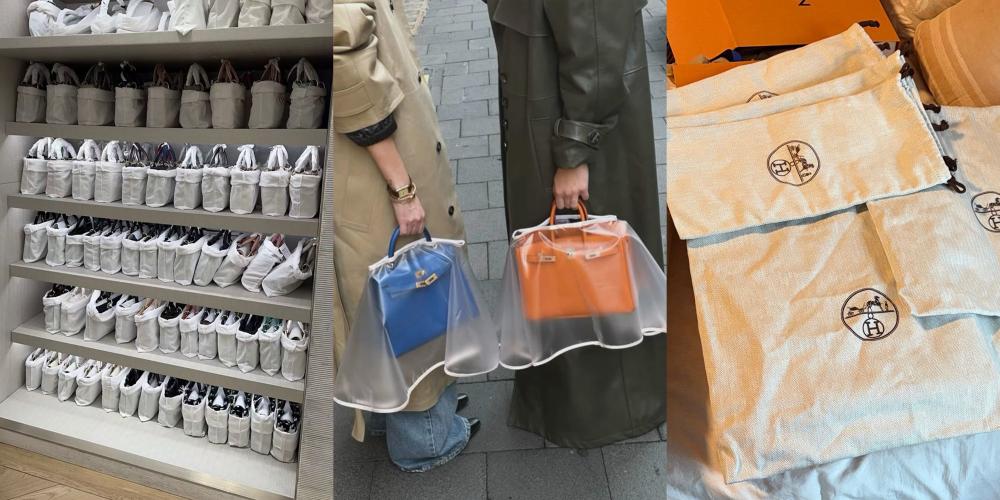
- Fabric dust bags
- Open shelving away from direct light
- Closets with natural airflow
If you use a box, open it regularly and avoid airtight seals.
Dust Bags: What They Do Well and What They Don’t
Dust bags protect against:
- Dust
- Friction
- Light exposure
They do not control humidity.
Good dust bag habits
- Store bags clean and dry
- Keep drawstrings loose
- Avoid overcrowding shelves
In humid climates, occasional airing is more protective than constant covering.
Daily Handling Habits That Slowly Affect Color
Daily use leaves small traces that add up over time.
Handle care
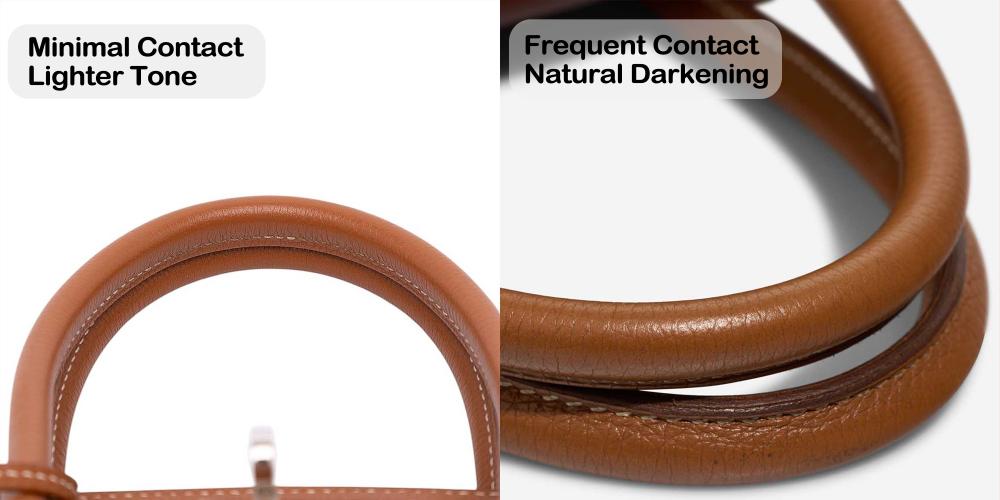
Hands carry oils, sunscreen, sweat, and lotion. These substances darken leather, especially in warm or humid conditions.
Helpful habits include:
- Rotating how you carry the bag
- Avoiding unnecessary gripping in heat
- Lightly wiping handles with a dry cloth after use
These small actions slow handle darkening significantly.
Clothing Transfer and Environmental Conditions
Humidity increases dye transfer from clothing.
Dark denim, leather jackets, and heavily dyed coats transfer color more easily when moisture is present in the air.
Light-colored Hermès bags are particularly vulnerable.
If you know transfer is likely:
- Limit prolonged contact
- Avoid friction while walking
- Address marks early before they set
Rain and Accidental Moisture Exposure
Rain is not an automatic disaster if handled calmly.
After exposure
- Blot gently with a dry cloth
- Do not rub
- Allow to air dry naturally
What to avoid
- No hair dryers
- No heaters
- No direct sun to speed drying
Fast drying causes stiffness and uneven color.
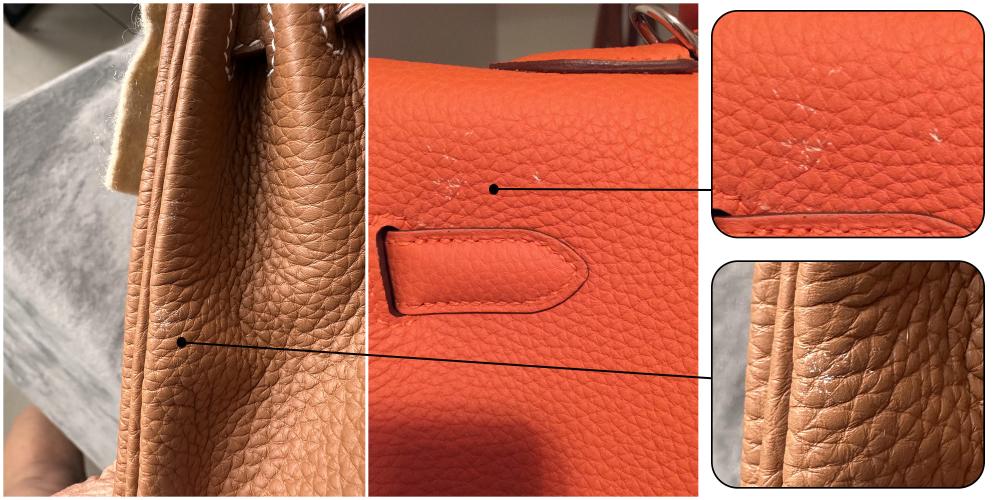
Leather Bloom: What It Is and Why It Happens
Bloom often scares owners, but it is usually reversible.
Bloom is caused by:
- Natural oils rising to the surface
- Temperature shifts
- Humidity changes
- Long storage without airflow
It appears as a white haze or chalky film.
Safe removal
- Use a soft, dry cloth
- Wipe gently in one direction
- Avoid conditioners immediately afterward
Repeated bloom signals that storage conditions need adjustment.
Conditioning: A Step Many People Overuse
Conditioning is not routine maintenance. It is corrective care.
When conditioning is appropriate
- Leather feels dry to the touch
- Bag stored long-term in dry conditions
- After extended heat exposure
When conditioning causes problems
- In humid climates
- On Epsom leather
- When done too often
Over-conditioning darkens leather and attracts dirt. Many Hermès bags need conditioning once a year or less.
Seasonal Adjustments That Make a Difference
Leather reacts to seasonal changes just like skin.
Summer
- Increase airflow
- Reduce sun exposure
- Monitor humidity weekly
Winter
- Watch for dryness from heating
- Reduce silica use
- Keep bags away from vents and radiators
Adjusting with the seasons prevents stress buildup.
Long-Term Storage vs Regular Rotation
If you rotate bags or store some long-term, environment matters even more.
Long-term storage tips
- Clean lightly before storing
- Stuff with acid-free paper
- Store upright, never flat
- Check monthly
Bringing a bag back into use
Let it acclimate to room temperature before wearing. Sudden changes stress leather fibers.
Travel: Temporary Stress With Lasting Effects
Travel exposes bags to heat, pressure, and unfamiliar climates.
Helpful habits:
- Always use dust bags
- Avoid overhead bins near heat
- Do not compress structured bags
- Let bags rest and air out after travel
Travel-related damage often appears weeks later.
Common Myths About Hermès Bag Color Care
“Hermès leather does not fade.”
It does. It just fades slowly.
“Only light colors need protection.”
Dark colors fade too, often unevenly.
“Products matter more than environment.”
Environment matters more than any cream.
A Simple Maintenance Rhythm That Works
Weekly
- Briefly air out stored bags
- Check for dampness or odor
- Rotate position if near light
Monthly
- Inspect handles and corners
- Refresh silica if needed
- Wipe gently with a dry cloth
Consistency beats intensity.
Final Thoughts: Care That Fits Real Life
Hermès bags are meant to be worn, not hidden. Good color care is not about fear or perfection. It is about understanding how sun and humidity work, then making small adjustments that reduce long-term stress.
If you remember only three principles, make them these:
- Avoid repeated direct sunlight
- Keep humidity balanced, not extreme
- Let leather breathe
Follow those habits, and your Hermès bag’s color will age evenly, naturally, and beautifully over time.