Worldwide tracked delivery · Carefully selected quality · Personal order support

Bag Lining Leathers and What They Mean for Wear: How Hermes Interior Materials Shape Feel, Structure, and Aging
Dec 16, 2025
By
Sophia Whitmore
0 comment(s)
Hermes gets plenty of attention for its exterior leathers, but the interior matters just as much. The lining is quieter and softer, yet it shapes how the bag feels, how it holds structure, and how it ages.
This guide explains the main Hermes lining leathers, how they behave, and what they mean for durability so you can choose or compare bags with more confidence.
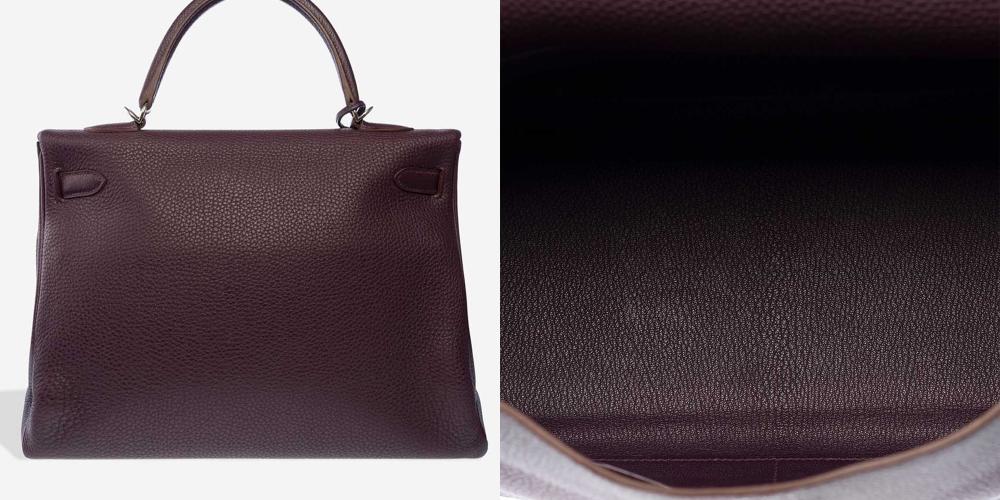
Why Lining Leather Matters More Than People Think
Most of a bag’s daily contact happens inside. Phones, keys, pens, receipts, hand cream. Everything touches the lining. That means the interior takes steady friction every time you reach in or slide something across the pocket edge. Lining leather affects the following:
1. Touch and softness
Some Hermes linings feel velvety while others have a mild gloss. That difference changes the feeling when you open the bag and reach inside.
2. Structure and slouch
Interior leather can reinforce or soften the bag from within. Two bags with the same exterior leather can behave differently if their linings are not the same weight or grain.
3. Wear patterns
Scratches, stretching inside pockets, pressure dents from heavy items, bubbling near stitches. These show up sooner or later depending on the lining leather.
4. Color transfer
Light linings show marks easily. Dark linings hide them but may show corner shine over time.
The lining is not an afterthought. It sets the tone for daily use and long term appearance.
The Main Hermes Lining Leathers
Hermes uses a small group of interior leathers. Each one appears in certain bag families and certain production years. Knowing the differences helps you identify authenticity and predict wear.
Chevre Mysore
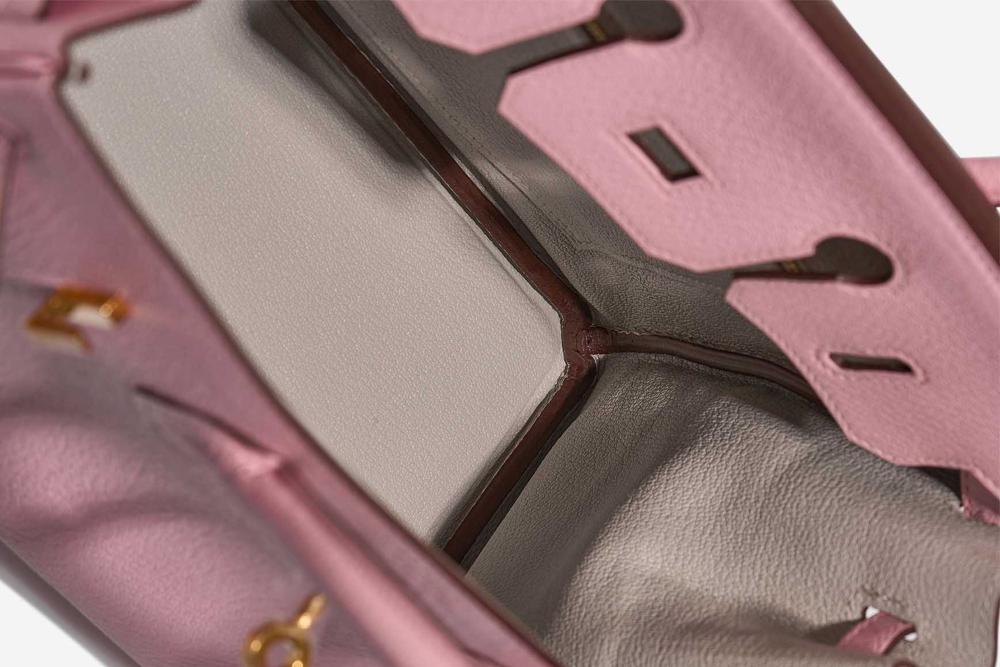
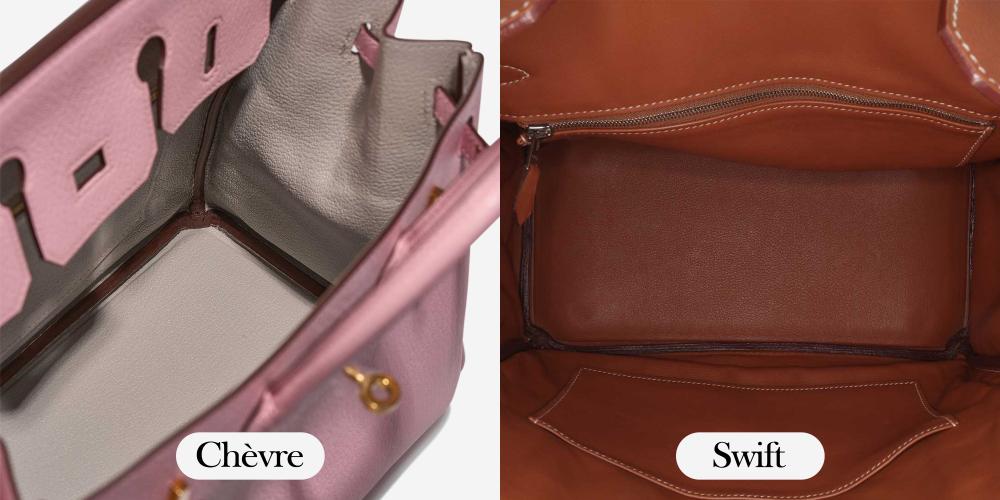
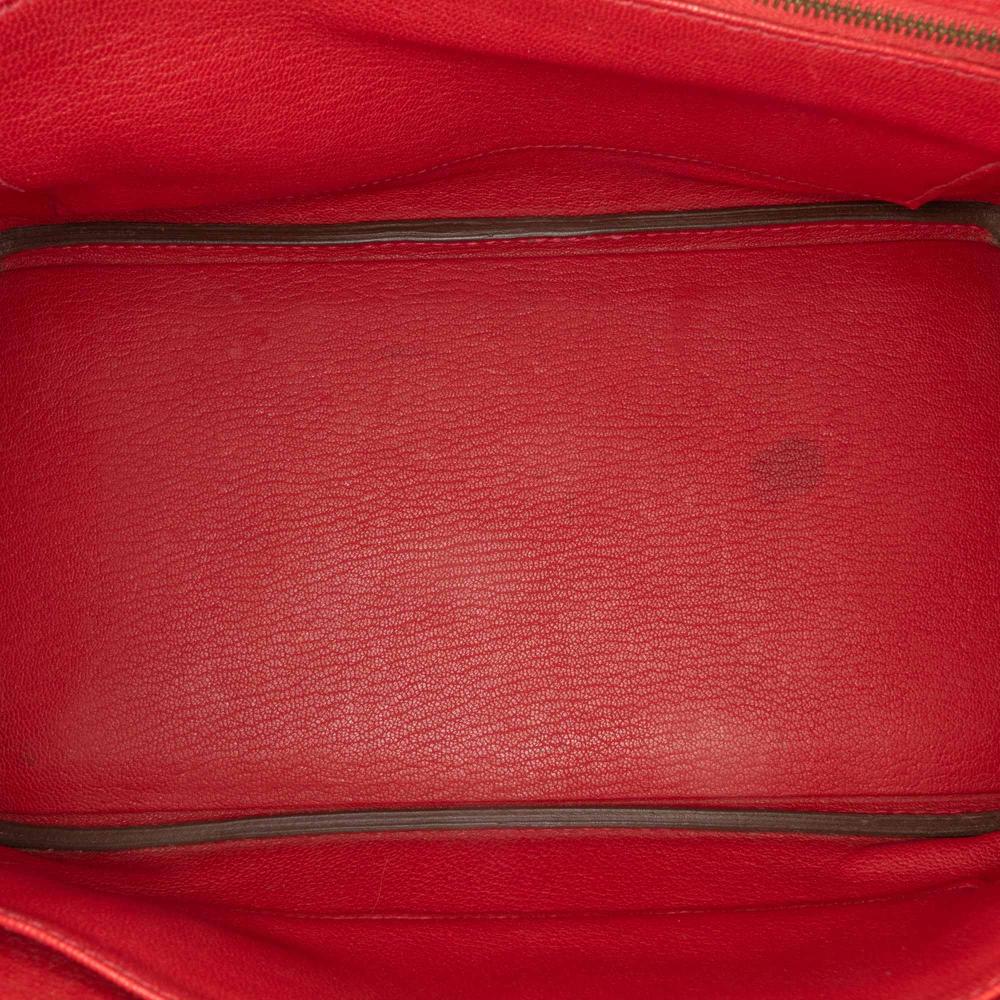
Chevre Mysore is the most common modern lining leather for many Hermes bags. It is made from goat hide and has a small, lively grain.
How it feels:
Light, dry to the touch, and slightly textured. It has a crisp hand that makes opening pockets feel neat rather than soft.
How it wears:
Chevre Mysore is tough. It resists scratches better than calfskins and stays bright inside the bag. The grain helps hide small fingernail marks that happen when you reach inside quickly. It does not stretch easily, which keeps pockets from sagging.
Where you will find it:
Birkin and Kelly interiors, Constance linings, and many smaller structured bags.
Durability verdict:
Excellent. This is one of the longest lasting Hermes interior leathers. If durability matters most, Chevre Mysore is a strong choice.
Evercolor
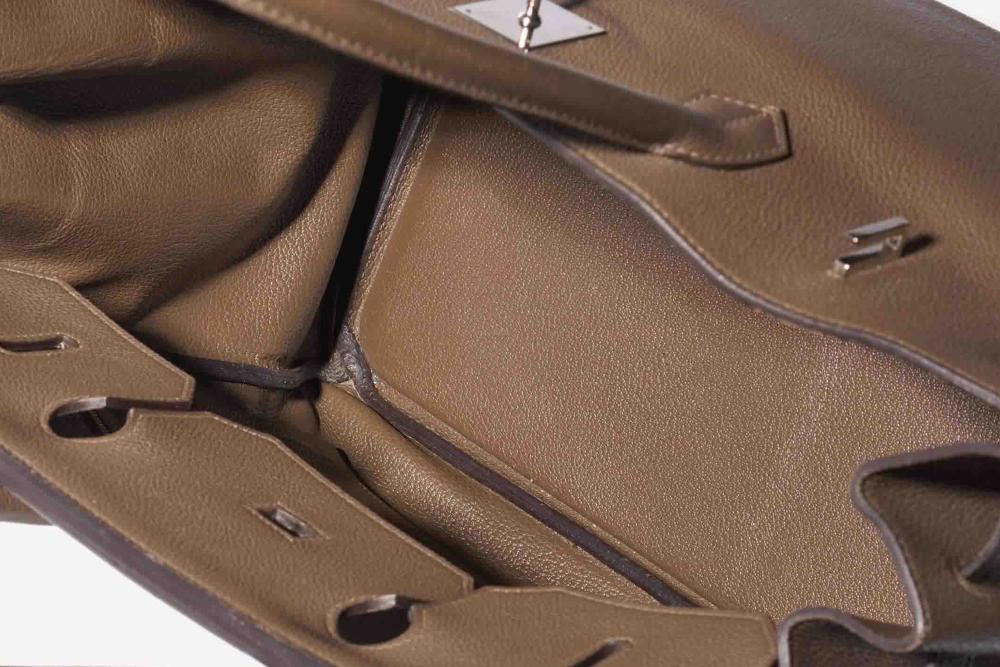
Evercolor is a calfskin that is smooth with a tiny grain. Hermes often uses it as both exterior and interior leather in modern styles.
How it feels:
Soft, satin-like, and slightly more cushioned than Chevre. It makes the interior feel gentle and refined.
How it wears:
Because it is softer, Evercolor can show small scratches more easily. Pocket edges may polish or shine with long use. It keeps shape better than Swift but not as firmly as Chevre.
Where you will find it:
Some Lindy interiors, Roulis, certain Kelly variations, and modern seasonal pieces.
Durability verdict:
Good, though more sensitive. Choose this if you like a soft interior and do not mind careful use.
Swift
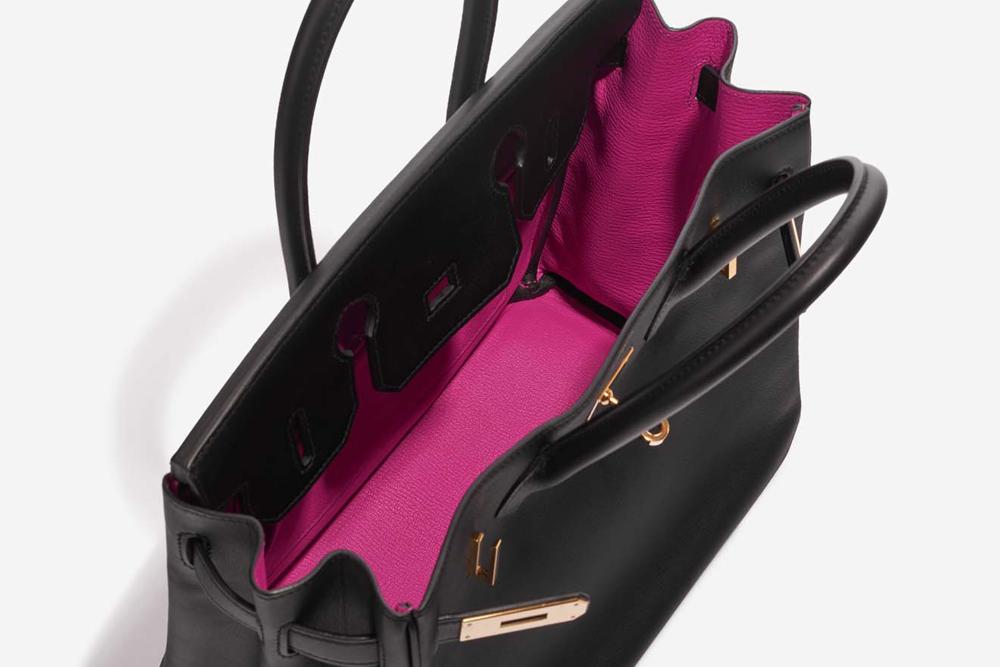
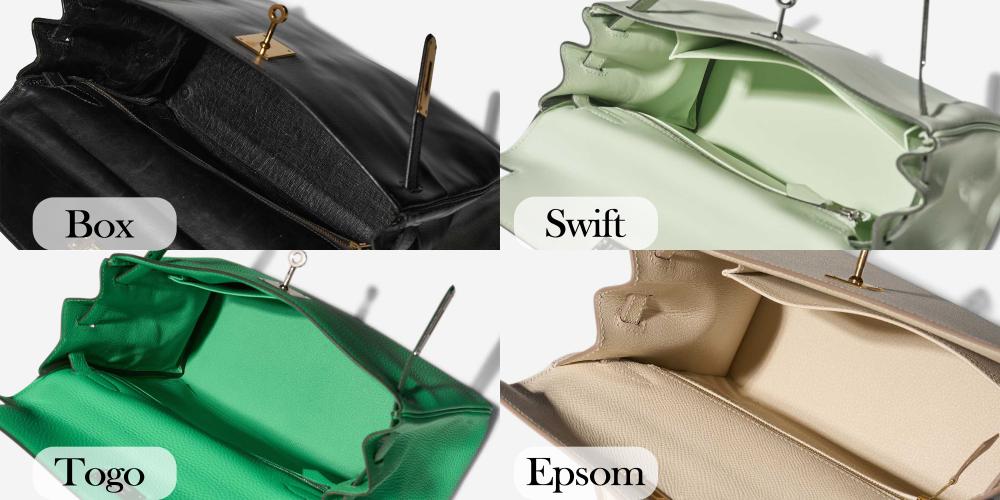
Swift is a smooth, fine-grain calfskin that is known for taking color beautifully. Many collectors recognize Swift from exterior use, but Hermes also uses it as lining in various models.
How it feels:
Supple and almost suede-like in softness, but without fuzz. The hand is smooth and buttery.
How it wears:
Swift shows scratches faster than most linings. It also softens as it ages, which can add slouch to a bag that already leans toward a relaxed shape. Light colors will show marks inside pockets.
Where you will find it:
Mini and small structured bags, some newer Kelly styles, certain color-driven pieces.
Durability verdict:
Moderate. Wonderful to the touch, but higher maintenance.
Box Calf (as Lining)
Box is usually an exterior leather, but Hermes sometimes uses thin Box calf as lining on structured or vintage pieces.
How it feels:
Smooth with a gentle shine. Firmer than Swift or Evercolor.
How it wears:
Box resists stretching better than lambskin or Swift, but it does scratch. Interior scratches show as faint lines. Over time, Box can develop a soft patina inside the bag, which looks beautiful in vintage pieces.
Where you will find it:
Vintage Kelly Selliers, earlier rigid constructions, some special orders.
Durability verdict:
Good. Strong but susceptible to surface marks.
Goat Suede (Alcantara-like interiors)
Hermes rarely uses suede-like interiors, but some vintage or seasonal pieces include them.
How it feels:
Velvety and soft. Very high-end in the hand.
How it wears:
Suede catches lint and dust. It can darken with oils from fingertips. It also shows pressure spots inside pockets. It is not the most practical interior if you carry pens, lip gloss, or anything that may leak.
Where you will find it:
Vintage clutches, special editions, some evening bags.
Durability verdict:
Low to moderate depending on use.
How Lining Leather Affects a Bag’s Structure
Most buyers know that exterior leathers shape the slouch or stiffness of a Hermes bag. Togo softens. Epsom stays sharp. Box is firm. But lining leather also plays a surprising role.
1. Pockets and internal support
Pockets are small architectural pieces inside a bag. If the lining leather is stiff, the pocket stays upright. If it is soft, the pocket may relax and slouch. Chevre-lined pockets tend to stay crisp. Swift pockets stretch and take the shape of whatever you place inside.
Example:
A Kelly 28 in Togo with a Chevre lining may keep a cleaner base pocket line than the same Togo Kelly with Swift lining.
2. The bag’s overall “give”
The lining acts like an inner layer of reinforcement. Lining types with tight grain, like Chevre, add a subtle firmness. Softer leathers add pliability. Over years of use, that difference becomes more visible.
3. Weight and handling
Lining leather is thinner than exterior leather, but it still affects weight. Bags with Chevre interiors often feel slightly lighter than those lined in calfskin. It’s a small difference, but noticeable if you carry the bag often.
4. Flex points at corners
Corner wear often begins inside before it shows outside. The lining experiences pressure where the bag bends. Softer lining leathers stretch at these points sooner. Firmer lining leathers resist deformation.
If you want to know more about Hermès fashion, you can visit our Hermès blog.
Color Choices and Visibility of Wear
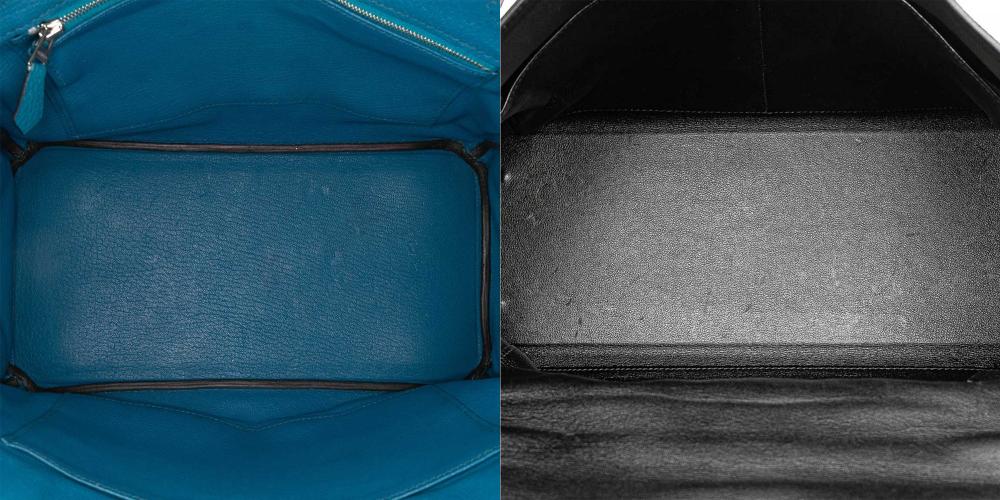
Interior color matters. Hermes uses lighter linings in some bags to help you see inside the bag. But lighter linings show marks more clearly.
Light linings
Pros:
Easy to see your belongings. Bright, airy look. Works well with pastel exterior colors.
Cons:
Shows ink marks, makeup smudges, nail scratches, and pressure dents quickly.
Dark linings
Pros:
Hides marks well. Ages gracefully. Matches darker exterior tones.
Cons:
Slightly harder to see small items. Corner shine is more visible when the lining polishes from long use.
If you carry makeup, pens, or anything sharp, a dark interior can help maintain a cleaner look long term.
How to Evaluate Lining Condition When Buying Preloved
Many listings focus on exterior condition, but the interior tells a deeper story about how the bag was used.
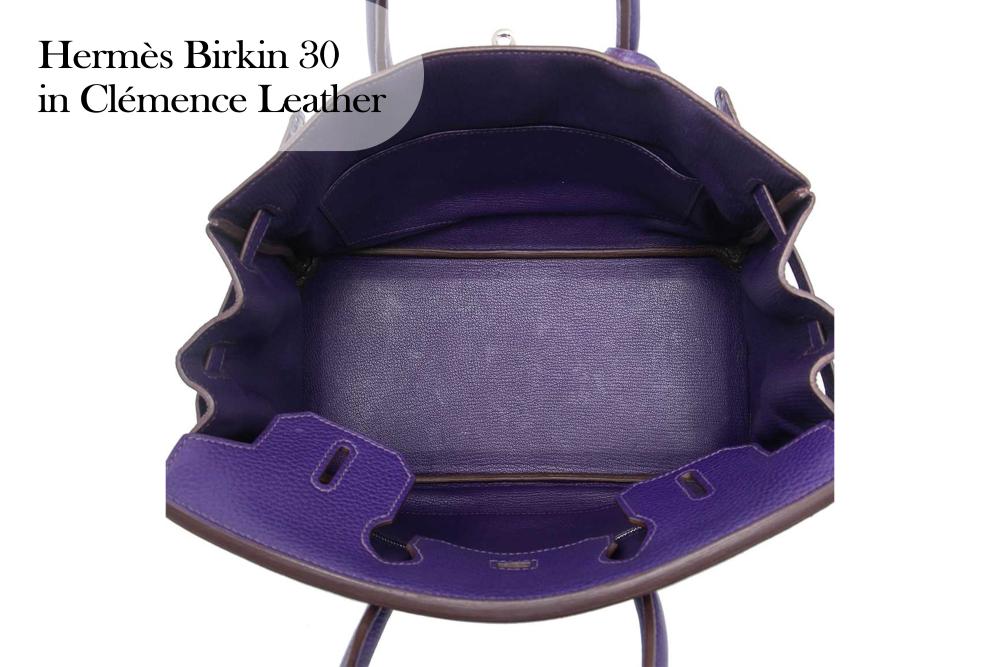
Here is what to check:
1. Pocket stretching
Slide a flat card into the pocket in photos. If it looks loose or bowed, the lining may be stretched. This is common with Swift and lambskin.
2. Corner friction
Look at inside corners. If the lining has shine or thinning, the bag saw heavier use.
3. Ink marks
Pens often leave tiny freckles along the bottom seams. Light linings show these the most.
4. Stitch impressions
If the lining shows deep stitch indentations, it may have softened more than usual. This is common in older lambskin-lined bags.
5. Loose interior piping
If piping or pocket edges look wavy, the lining leather has relaxed. It may not affect function, but it affects structure.
A clean lining is a good sign. It means the bag was either used lightly or cared for well.
Practical Tips to Prolong Interior Life
You cannot control the leather Hermes selected for your bag, but you can control how you treat it.
Use small pouches.
Keep pens, keys, and cosmetics inside pouches. This stops scratches and ink marks.
Rotate what you carry.
Pressure spots form when the same heavy object rests in the same place every day. Move your items around occasionally.
Avoid oils and lotions before handling the interior.
Soft calfskins absorb oils quickly. Wash or wipe hands after using hand cream.
Empty your bag at night.
Letting items sit inside creates long term dents. A quick emptying prolongs structure.
Do not overfill pockets.
Pocket sag is permanent once stretched.
These simple habits help the lining leather age gracefully.
Matching Lining Leather to Your Lifestyle
If you are deciding between Hermes bags and want the most practical option, think about how you use your bag day to day.
If you want the most durable lining
Choose Chevre. It handles friction, stays crisp, and hides small marks.
If you want a soft and refined interior
Choose Evercolor or Swift. They feel beautiful, but they need more care.
If you are a collector of vintage Hermes
Expect lambskin linings. Accept them as part of vintage charm and treat them gently.
If you carry many small items
Choose a bag with a darker lining to keep the interior looking clean over time.
How Hermes Chooses Lining Leathers for Each Bag
While collectors often focus on trends, Hermes focuses on function. The company selects lining leathers that match the personality of each bag.
Birkin and Kelly
Most modern Birkin and Kelly bags use Chevre Mysore lining because it keeps the interior structured and wears well. Hermes expects these bags to be used often, so it chooses the most stable option.
Constance
Many Constances use Chevre lining, but some have lambskin in older models. The interior is visible every time you open the front flap, so Hermes chooses leathers that look crisp and polished.
Lindy
Many Lindy bags have Evercolor or Swift linings to complement the soft and relaxed shape. The lining adds to the slouchy feel.
Smaller pochettes and clutches
These may have softer linings because they carry fewer items and face less friction.
Hermes designs around how the bag should behave, and the lining leather is a key part of that design.
If you want to know more about Hermès, visit our Hermès blog.
How Lining Leather Affects Resale Value
The condition of the lining often makes the difference between a “good,” “very good,” and “excellent” listing.
Here is how lining leather plays into resale:
Chevre-lined bags
Hold value extremely well because Chevre stays clean. Even moderate use leaves fewer marks.
Swift-lined bags
May show interior scratches or pressure dents. Buyers care about this, so these bags may price slightly lower unless otherwise pristine.
Lambskin-lined vintage bags
Condition varies widely. A clean lambskin lining is more valuable because it is rare.
Bright or light interior colors
If clean, they boost value. If marked, they lower it more than dark linings.
If you want the highest resale flexibility, choose Chevre.
Final Thoughts
The lining plays a bigger role in a Hermes bag than most people realize. It shapes the feel, structure, and how well the bag holds up over time. Chevre is the toughest option, calfskins like Evercolor and Swift are softer but need care, and lambskin is the most delicate.
Once you understand these differences, it’s easier to choose a bag that fits your habits and judge the condition of a preowned one.