Worldwide tracked delivery · Carefully selected quality · Personal order support

What Dupe Claims Miss About Hermes Bag Leather: The Real Differences in Craft, Construction, and Longevity
Apr 29, 2026
By
Sophia Whitmore
0 comment(s)
When people compare Hermès leather vs dupes, the conversation usually focuses on looks. Does it resemble the color? Is the shape similar? Does the hardware shine the same way? But the real difference is not in the surface impression. It is in the construction, the leather selection, and the craft decisions that shape how the bag ages over decades.
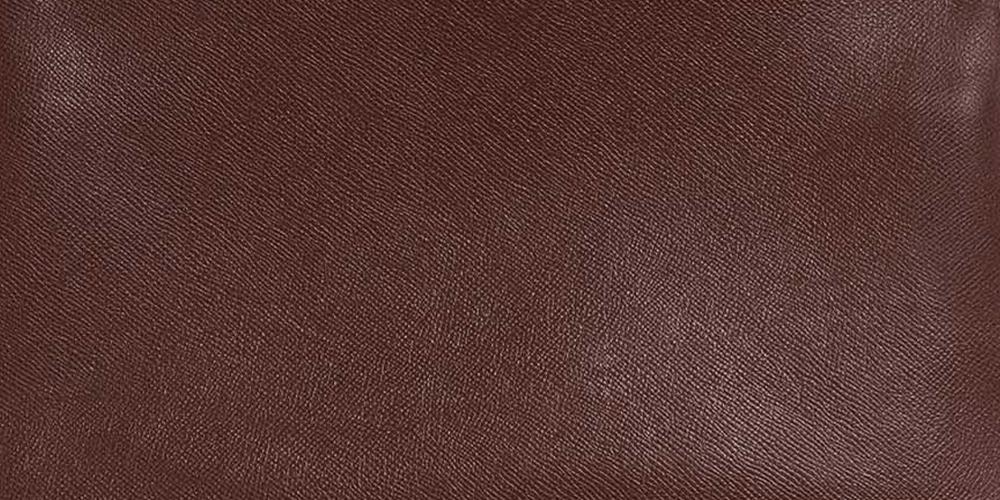
In this article, we will look closely at what dupe and replica claims often promise, how that compares to the leathercraft priorities of Hermès, and what actually matters when evaluating Hermès bag leather quality. The goal is not to debate price or brand loyalty. It is to understand what is truly being compared.
The Core Claim: “It’s the Same Leather”
Many dupes and replicas make a simple argument: they use “real leather,” sometimes even “imported European leather,” and therefore the quality is basically the same.
At first glance, this sounds reasonable. If both bags are made of leather, how different can they really be?
The difference begins long before the leather becomes a bag.
Hermès does not just buy leather by the roll. The house works with specific tanneries, many of which have long-term partnerships. Skins are selected based on strict criteria: grain consistency, fiber density, thickness, elasticity, and how the hide responds to dye. The standards are not about looking good in photos. They are about long-term structure.
Dupes, on the other hand, often focus on surface resemblance. The leather may be genuine, but the grading standards are rarely disclosed. In many cases:
- The hides are corrected to hide flaws.
- Surface embossing is used to imitate a specific grain.
- Coatings are applied to create a uniform finish.
- Thickness is adjusted to reduce cost.
When a seller says “same leather,” they usually mean the same animal source. They rarely mean the same selection process, tannery standard, or long-term performance.
That distinction matters.
Leather Selection vs. Leather Appearance
To understand the gap in a Hermès replica comparison, you have to separate two ideas: how leather looks and how leather behaves.
A bag can look smooth, evenly colored, and beautifully shaped on day one. That does not mean it will age well. Leather quality shows itself over time.
Hermès leathers are chosen for:
- Controlled suppleness
- Structural resilience
- Resistance to excessive stretching
- Even dye absorption through the hide
- A balance between firmness and flexibility
Dupes often prioritize:
- Immediate softness
- Uniform color saturation on the surface
- Visual resemblance to popular Hermès leathers
- Cost efficiency in sourcing
The result is that a dupe may feel very soft at first, which many buyers interpret as luxury. But that softness can signal lower fiber density or heavy surface treatment. Over time, the bag may lose shape, develop uneven creasing, or show color wear in high-friction areas.
The difference is not always obvious in photos. It becomes obvious in year three, not week three.
Grain: Natural Structure vs. Stamped Imitation
One of the most visible differences in Hermès leather vs dupes appears in the grain.
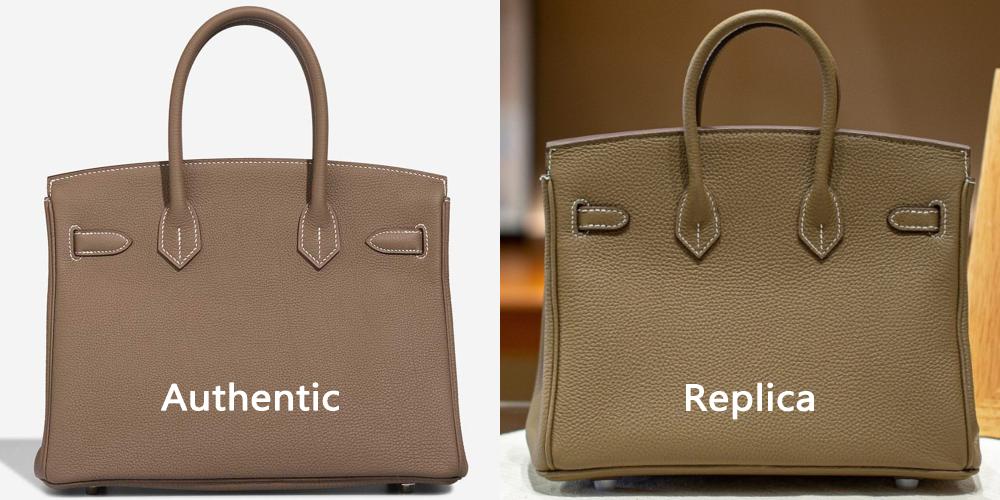
Hermès offers different leathers, each with a distinct grain pattern. In many cases, that grain is either naturally pebbled due to the hide structure or carefully processed to enhance natural characteristics without flattening the fiber core.
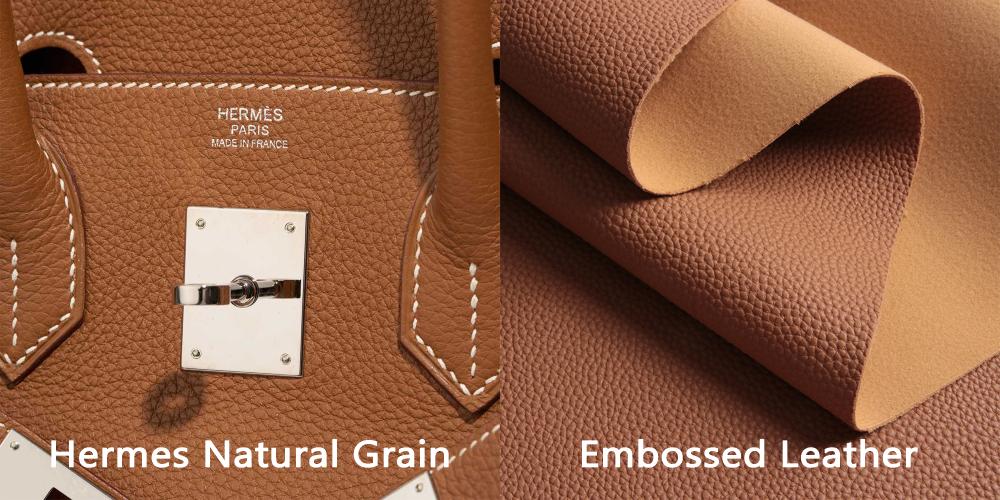
Dupes often replicate these looks using heavy embossing. The surface is pressed with a pattern that mimics the grain of popular Hermès leathers.
Here is where the difference shows:
- Natural grain varies slightly across the surface. It feels organic. When pressed, it has subtle resistance.
- Embossed grain is more uniform. It may feel slightly rigid or coated. When pressed, the surface can flatten in a way that reveals its artificial stamping.
Over time, natural grain develops a lived-in softness while maintaining structure. Embossed grain can begin to look artificial as the top layer wears down.
This is one of the most common red flags in a Hermès replica comparison. The grain looks right from a distance but feels different under pressure.
If you want to know more about Hermès fashion, you can visit our Hermès blog.
Dye Depth and Color Integrity
Another major claim from dupe sellers is color accuracy. They will highlight that their shade matches a popular Hermès color.
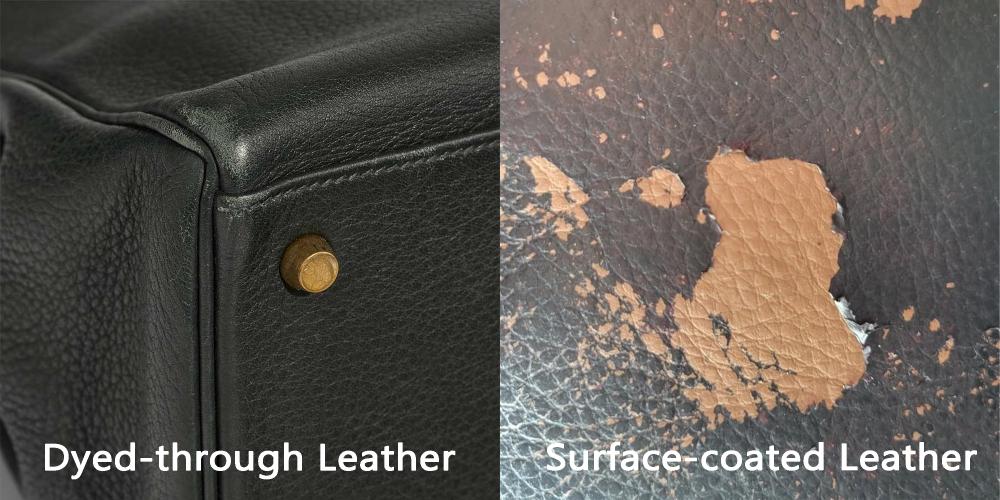
Color matching is not the same as dye depth.
High-quality leather is dyed in a way that allows pigment to penetrate deeply into the fibers. This produces:
- Rich, dimensional color
- Better resistance to surface scratching
- Less obvious fading when the leather flexes
Lower-cost production often relies on surface-heavy dye and finishing layers. The color may look bold and saturated at first. But when scratched lightly or bent sharply, a lighter undertone may show through.
Hermès bag leather quality is not just about the shade name. It is about how the color lives inside the leather, not just on top of it.
This becomes especially visible along edges, handles, and corners. These are stress points. Over time, shallow dye processes reveal themselves quickly.
Structure: The Hidden Architecture
Many replica claims focus on leather type but ignore construction.
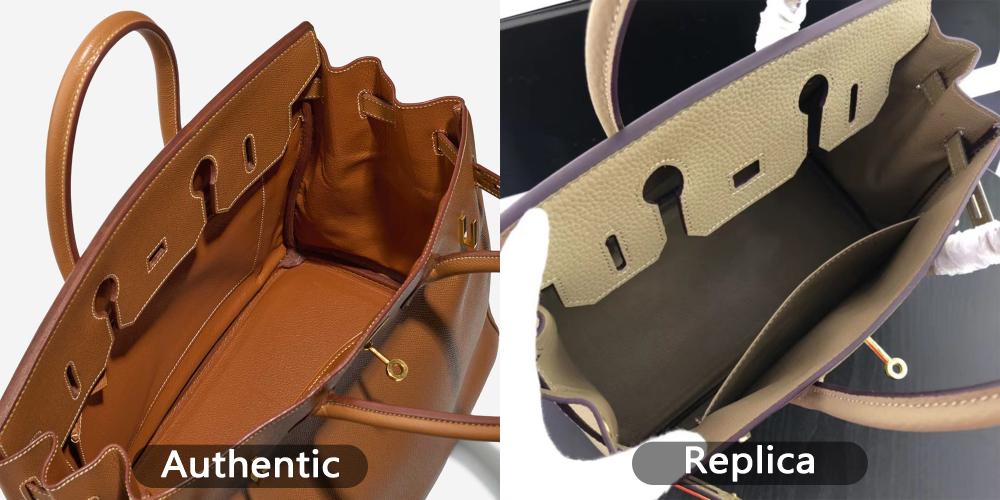
Hermès bags are built with internal structure in mind. The leather is cut with attention to direction, stretch, and tension. Panels are aligned to preserve shape over time. Reinforcements are placed where stress accumulates.
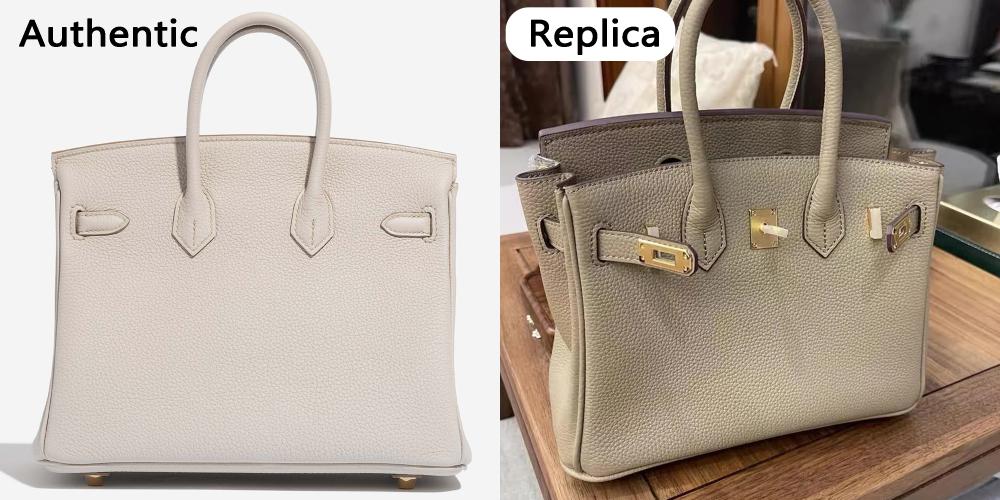
Dupes often prioritize exterior similarity. Internally, compromises may include:
- Thinner lining materials
- Simplified reinforcement
- Less precise panel alignment
- Reduced edge finishing labor
A bag’s silhouette is not only about leather thickness. It is about how the leather is supported.
An authentic-style Hermès bag maintains its shape because of careful tension distribution. A dupe may sag or collapse more quickly because the internal engineering is different.
This is rarely mentioned in marketing copy. It is hard to photograph. But it defines longevity.
Stitching: Precision vs. Approximation
Stitching is often cited in a Hermès replica comparison, especially saddle stitching.
Hermès is known for hand saddle stitching. This technique uses two needles working in opposite directions through the same hole. It creates a strong, balanced stitch that does not unravel easily.
What dupe claims often miss:
- Consistency of stitch spacing
- Even tension across curves
- Thread quality and thickness
- Alignment at corners and hardware bases
A replica may use machine stitching that looks similar at a glance. Some high-tier replicas attempt hand stitching. But the rhythm of the stitch often differs.
Look closely and you may notice:
- Slightly uneven spacing
- Tension variation near curves
- Corners that do not align cleanly
- Edge paint overlapping onto thread
These are small details. But leathercraft is a game of small details.
Edge Finishing and Paint
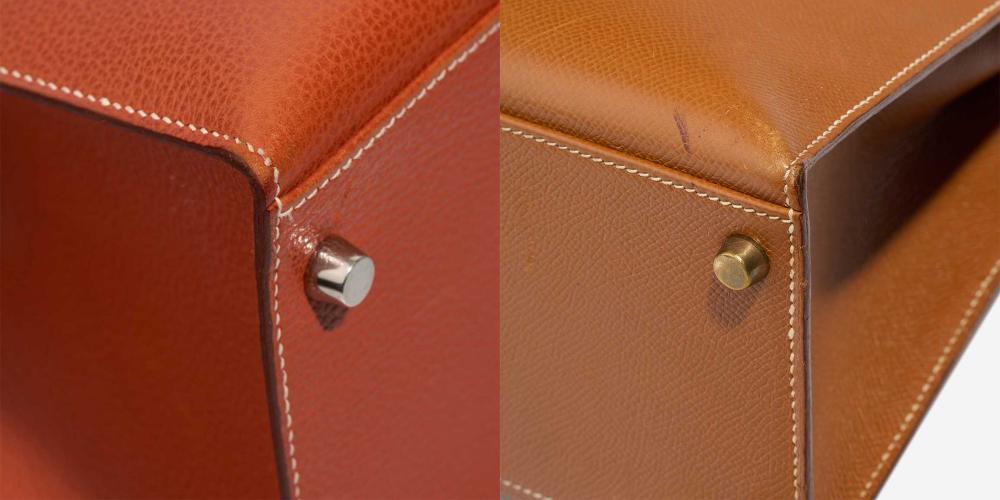
Edge finishing is one of the most overlooked indicators of Hermès bag leather quality.
Hermès edges are typically:
- Carefully sanded between layers
- Built up gradually with multiple thin coats
- Polished for smoothness
- Color-matched precisely
In many dupes, edge paint is applied more quickly. It may appear thick or slightly rubbery. Over time, it can crack or peel, especially near handles.
This is not about perfectionism. It is about labor investment.
Edge finishing takes time. Time costs money. Dupes compete on price, so edge work is often streamlined.
Hardware Integration
Leather and hardware must work together. In authentic construction, hardware is integrated with reinforcement behind stress points. Stitching around hardware is precise and symmetrical.
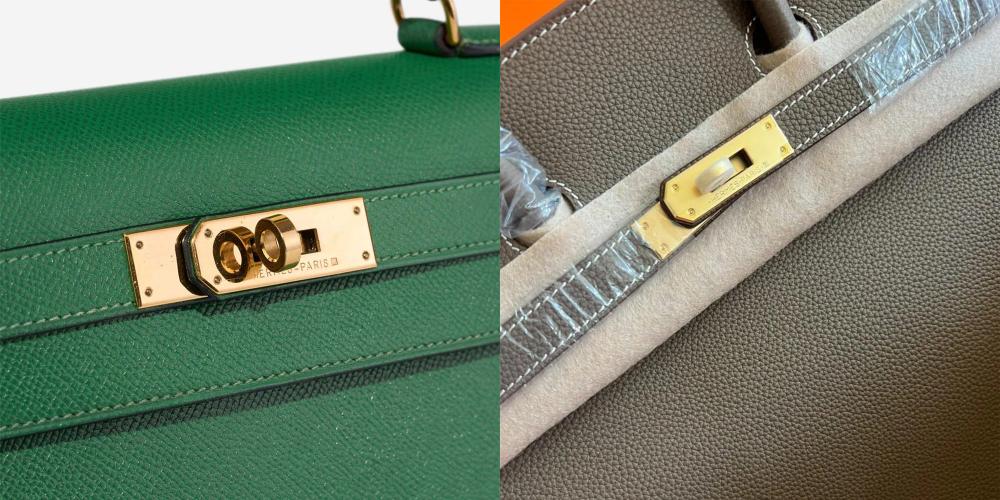
In dupes, hardware may look similar in color or shape. But:
- Backing plates may be thinner.
- Screws may not sit flush.
- Tension may pull unevenly on leather panels.
Over time, this can cause distortion around closures and handle bases.
The issue is not that replicas always fail immediately. It is that they are not built with the same long-term load considerations.
The Myth of “Same Factory” Claims
A frequent marketing tactic is the suggestion that dupes come from the “same factory” or use “the same materials without the logo.”
From a manufacturing perspective, this is unlikely. Luxury houses maintain strict supply chains and quality controls. Tanneries, hardware suppliers, and artisans operate within contracted systems.
Even if a dupe sources from a reputable tannery, that does not mean:
- The same hide grades are used.
- The same rejection standards apply.
- The same quality control checkpoints exist.
Hermès bag leather quality is shaped by what is rejected as much as what is accepted. High rejection rates drive up cost. Dupes cannot operate with that margin and remain inexpensive.
When you see “same materials,” ask what that really means. Is it the same animal source? The same tannery? The same grade? The same finishing process?
Usually, the answer is partial at best.
Aging: The Long-Term Test
The real difference between Hermès leather vs dupes appears over time.
After one year of regular use:
- Does the bag hold its shape?
- Are corners darkened unevenly?
- Has the grain flattened?
- Are handles stretching asymmetrically?
After five years:
- Is the structure intact?
- Has the leather developed a rich patina or a dull surface?
- Are edges intact?
High-quality leather evolves. It softens slightly while retaining strength. It may develop fine lines, but these lines follow the grain naturally.
Lower-grade leather can develop deeper creases, coating cracks, and inconsistent fading.
Longevity is rarely discussed in replica listings because it cannot be demonstrated in a product page.
Why Visual Comparisons Can Be Misleading
Side-by-side photos are powerful. A dupe may look nearly identical in a carefully staged image.
Lighting can mask:
- Surface coatings
- Grain uniformity
- Stitch tension
- Minor asymmetries
Touch cannot be photographed. Density cannot be shown in a flat image.
When evaluating a Hermès replica comparison, it helps to think beyond screenshots. Consider how the bag behaves when squeezed, carried daily, or exposed to weather changes.
Quality is multi-dimensional. Photos flatten those dimensions.
If you want to know more about Hermès, visit our Hermès blog.
What Actually Matters to Buyers
Not everyone needs heirloom-level construction. Some buyers want a similar look at a lower cost. That is a valid preference.
The key issue is transparency.
If a dupe is marketed as:
- “Inspired by” and priced accordingly, expectations are clearer.
- “Identical in every way,” the claim deserves scrutiny.
Understanding Hermès bag leather quality allows buyers to set realistic expectations. A lower-cost bag may still serve its purpose. It simply may not match the structural priorities of a luxury house built around leathercraft tradition.
The problem arises when surface resemblance is presented as structural equivalence.
They are not the same.
Practical Red Flags to Watch For
If you are comparing options, here are signs that a bag prioritizes appearance over craftsmanship:
- Grain that looks overly uniform and flat.
- Edge paint that appears thick or uneven.
- Stitch spacing that shifts noticeably near corners.
- Leather that feels extremely soft but lacks resilience.
- Color that appears painted on rather than absorbed.
None of these automatically prove low quality. But together, they suggest different production priorities.
Final Thoughts: Craft Is More Than a Look
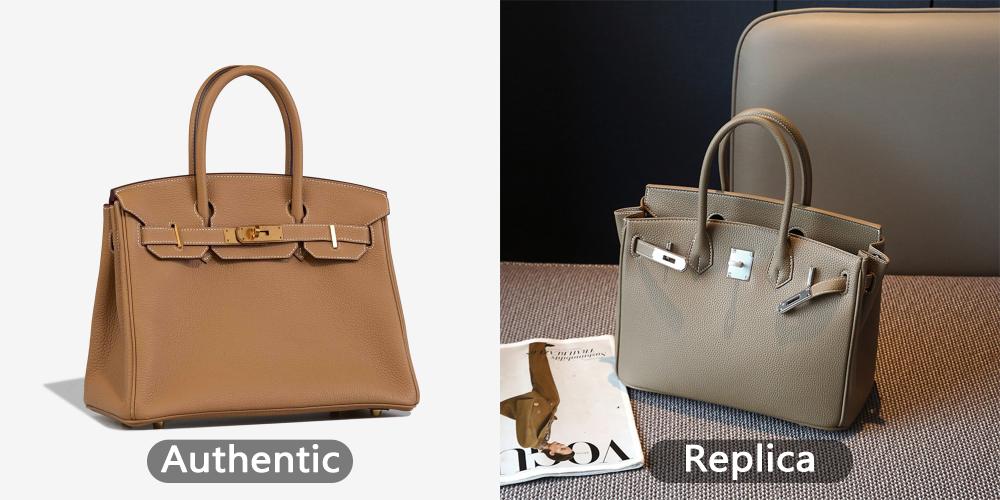
When discussions center on Hermès leather vs dupes, they often reduce the debate to branding. But leathercraft is not just branding.
It involves:
- Hide selection
- Tanning standards
- Grain integrity
- Dye depth
- Stitch method
- Edge finishing
- Structural reinforcement
- Quality control thresholds
Dupes focus on resemblance. Hermès focuses on longevity, structure, and consistency over decades.
That difference is not always dramatic on day one. It becomes clear with time, handling, and wear.